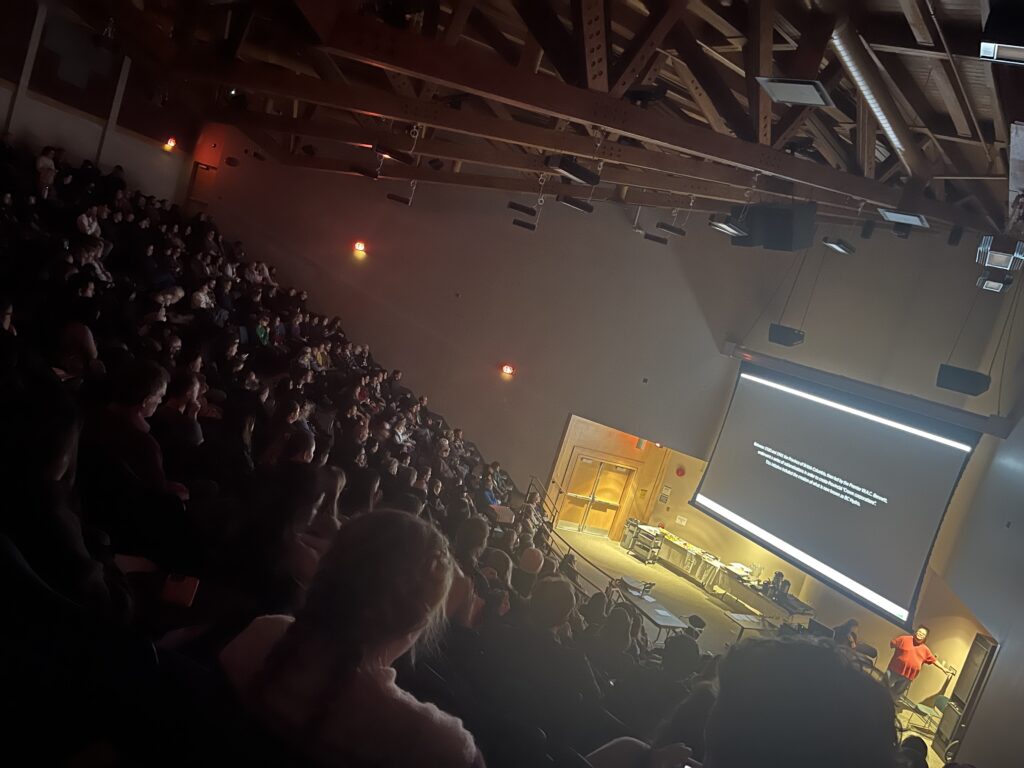
A few nights ago, my one of my education classes was lucky enough to attend a screening of the film “The Scattering of Man” filmed by Luke Gleeson. The film was incredibly powerful, it again gave visual to the massive mistreating of Indigenous peoples and their land. When I say their land was taken from them, I learned through this film that the meaning of land being taken goes a lot deeper than I ever knew. This film showed the complete miss-use of government powers. Indigenous peoples were essentially looked at as being invisible on the land they were living on. Government and corporations just went right over Indigenous landowners’ heads, and the most disgusting part is that the negative health implications that happened to those Indigenous peoples still living on the land did not seem to be acknowledged in the slightest. Still to this day the impacts done to the people living in this area does not seem to be of concern to anyone. I am thrilled that this film was made, I think it is a very effective/productive way to relay the message of mistreatment to the vast population. I stayed for the question period after the film, this was a time for Luke Gleeson to take questions from the audience regarding elements to do with the film. Something Gleeson said that really stuck with me was that he does not want to fight anymore, he does not necessarily believe in reconciliation. What Gleeson wants is to portray Indigenous stories through something he loves and enjoys doing, through film. He wants Indigenous voices to be heard but he wants to do it through a thing of beauty and art. I loved when he talked about this, and I think it is such a wonderful outlook on the reconciliation that Canada still needs to show to Indigenous peoples. I am grateful to be able to watch this film, I feel encouraged to see this innovative work being done by Indigenous communities and it is material and messages I would really like to bring into my classroom.